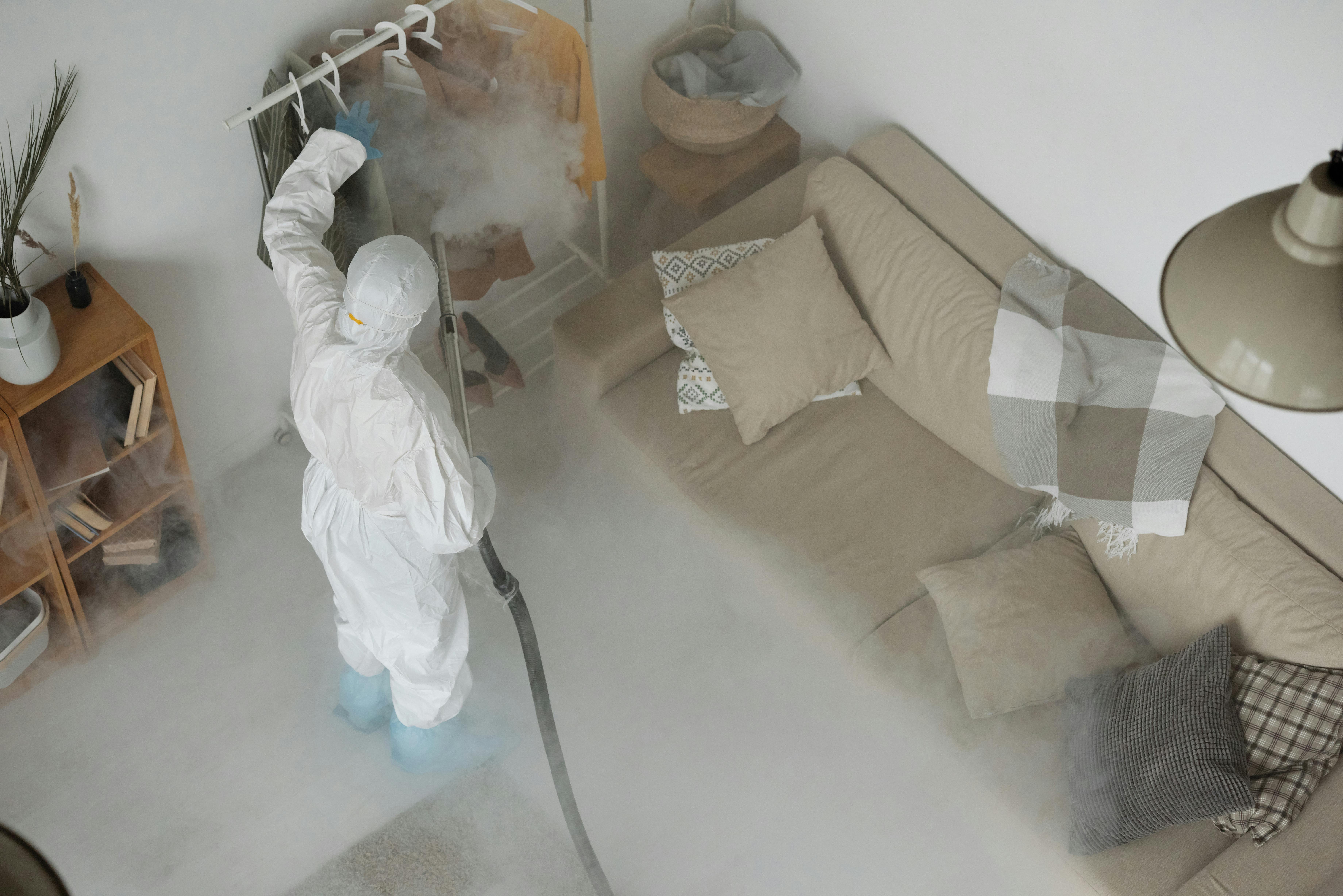
 — Pest inspection / Photo: Pexels
By John Kent, DMV housing analyst with 22+ years of experience and lifelong Bethesda resident.
Pest problems destroy condo investments in three ways: physical damage to the structure, lost rental income during treatment and vacancy, and a depressed resale price. Most buyers and investors overlook pest risk entirely during due diligence. A single infestation inside a shared building can spread through multiple units before anyone identifies the source.
Condos are not like single-family homes. When you share walls, plumbing chases, and HVAC systems with neighbors, you share their pest problems too.
Why Condos Face Higher Pest Risk
A pest that enters your neighbor's unit can reach yours through shared wall cavities, common plumbing lines, elevator shafts, hallway carpets, garbage chutes, and laundry rooms. In a house, you control the perimeter. In a condo building, every shared surface is a potential entry point you cannot inspect or seal on your own.
High tenant turnover makes the problem worse. Renters move in and out, sometimes carrying pests in furniture, boxes, or clothing. Buildings with many short-term rental units face elevated risk because the tenant pool changes faster and inspections happen less consistently.
The Four Most Destructive Pests
Not all pests carry the same financial risk. These four cause the most measurable damage to condo investment returns.
A pest problem you cannot see is still costing you money.
Termites: The Silent Structural Threat
Subterranean termites enter from the soil below the foundation. Drywood termites can enter through attic vents, windows, or infested furniture. Both types eat structural wood from the inside out, leaving a shell that looks intact from the outside.
By the time you see visible damage, the colony may have been active for two or three years. In a multi-unit building with shared structural components, the repair scope can involve the HOA as a whole, triggering a special assessment that every owner pays.
Bed Bugs: The Rental Income Killer
Bed bugs do not damage the structure. They damage the investment in a different way. A tenant in an infested unit can legally terminate a lease or withhold rent in most states. Treatment typically takes multiple visits over several weeks, during which the unit produces no income.
The reputation damage compounds the financial hit. A building with a documented bed bug history in multiple units becomes harder to lease, harder to sell, and harder to finance. Some lenders require pest-free inspections before approving a loan.
How Pests Damage Your Investment
Direct repair costs are just the beginning. A pest problem triggers a chain of financial damage that most condo investors do not fully account for before they buy.
Financial Impact by Category
| Damage Type | What It Looks Like in Practice |
|---|---|
| Structural repairs | Termite damage to shared framing may require HOA special assessments of $5,000 to $20,000+ per unit |
| Lost rental income | Bed bug treatment cycles can leave a unit vacant for two to four weeks per incident, multiple times per year |
| Resale discount | Buyers request price reductions or walk away after pest disclosure; some lenders require a clear WDI report to fund |
| Legal liability | Tenant lawsuits over habitability violations, especially for cockroach or bed bug infestations that go unaddressed |
| Insurance gaps | Standard condo policies do not cover pest damage; termite damage is treated as a maintenance failure and almost universally excluded |
Insurance exclusions matter more than most buyers realize. You cannot file a claim for termite damage under a standard condo owner policy. The cost falls entirely on the owner, and if the damage involves shared building components, a portion may fall on every owner in the building through the HOA.
Termite remediation that reaches subflooring or concrete foundation sections generates significant demolition debris. Before your contractor fills the dumpster, it is worth knowing you can find a concrete recycling center near you to divert that material from a landfill rather than paying standard disposal rates.
Pre-Purchase Pest Checklist
A pest inspection and a standard home inspection are different things. Most home inspectors note visible signs of pests but do not perform the targeted assessment that a licensed pest inspector does. Order both before you close on any condo.
- Order a WDI report. A Wood-Destroying Insect inspection is a separate service from a general home inspection. It checks for termites, carpenter ants, powder post beetles, and other wood-destroying pests. Most mortgage lenders require one anyway, so get it early.
- Request HOA pest treatment records. Ask the HOA management company for any pest treatment records from the past three years. Recurring treatments for the same pest in the same area signal an unresolved problem.
- Read two years of board meeting minutes. Pest complaints, building-wide treatments, and related lawsuits show up in board minutes. If the HOA stonewalls your request, treat that as a red flag on its own.
- Ask about bed bug history directly. Ask the listing agent and the management company whether any units in the building had confirmed bed bugs in the past 24 months. Disclosure laws vary by state, but asking the question on record matters.
- Walk the common areas. Cockroach droppings near trash rooms, mouse droppings near utility closets, hollow-sounding wood near baseboards, and water staining around pipe penetrations are all signs worth investigating before you make an offer.
- Confirm an active pest management contract. A building with a licensed pest management company on contract for regular inspections is run better than one that calls for help only when a problem appears.
This checklist belongs in your standard due diligence process alongside financials and HOA documents. For investors evaluating condo markets across the DMV, our guide to hidden gem condo markets in Baltimore, Rockville, and beyond covers other key variables to check before you buy.
HOA vs. Owner Responsibility
This question triggers more disputes between condo owners and HOAs than almost any other maintenance issue. The answer depends on your condo's declaration, bylaws, and your state's landlord-tenant laws.
As a general framework:
- HOAs are responsible for pests in common areas: lobbies, hallways, laundry rooms, trash chutes, garages, and shared HVAC systems.
- Individual unit owners are responsible for pests that originate inside their own unit.
- When an infestation travels from a common area into your unit, or from a neighboring unit through shared walls, responsibility becomes genuinely disputed and may require legal resolution.
Read the pest control provisions in your condo's declaration before you close. Some declarations assign full pest responsibility to individual owners. Others require the HOA to treat any infestation that crosses unit lines. The distinction can mean the difference between a $200 treatment and a $15,000 bill.
Prevention Strategies
You cannot control what your neighbors do, but you can reduce your unit's vulnerability significantly with targeted, low-cost measures.
Seal Every Entry Point
Caulk around pipes under sinks, around electrical outlets, and along baseboards where they meet the floor. Steel wool stuffed into plumbing penetrations stops rodents from entering through pipe chases. These materials cost less than $50 and provide real protection against the most common entry routes.
Control Moisture
Cockroaches, termites, and rodents thrive in damp conditions. Fix leaking pipes immediately. Use a dehumidifier in lower-floor units or units with laundry. Remove standing water anywhere it collects. Moisture control is one of the most effective forms of passive pest prevention.
Inspect at Every Tenant Turnover
If you own a rental unit, build a pest inspection into your turnover process. Walk the unit before a new tenant moves in. Address any signs early. Catching a problem during a vacancy costs far less than managing one after a tenant moves in and has legal remedies available.
Budget for Proactive Treatment
A quarterly spray or bait application by a licensed pest control company costs $100 to $300 per visit. An emergency treatment for an established infestation costs ten to fifty times more. Proactive treatment is not a luxury for investment properties. It is part of the operating cost. When you price out a recurring contract, compare what each provider actually includes — some pest control companies bundle exterior perimeter treatment and rodent exclusion into the quarterly visit, while others bill those separately.
For investors building a condo portfolio along transit corridors like the Purple Line in Maryland, pest management belongs in the underwriting model from day one alongside HOA fees, insurance, and property taxes.
Professional Pest Management
A licensed pest management company familiar with multi-unit buildings approaches problems differently than a general exterminator. They identify root entry points, coordinate with building management, and design treatment plans that address cross-unit spread rather than treating visible pests unit by unit.
If you own a condo as a long-term investment or as a primary residence, selecting the right professional matters as much as selecting the right treatment method. For an in-depth look at how pest professionals approach condo and apartment buildings specifically, including how they coordinate with HOAs and handle shared-space infestations, this guide to condo pest control for apartment and condo residents covers the full picture. Owners in the Midwest should look for providers experienced with the region's specific pest pressures — Midwest Pest and Wildlife Control is one example of a company that specializes in multi-unit residential buildings across that market.
Understanding how professionals assess your building type helps you ask better questions when you hire a provider and evaluate whether your HOA's current contract is adequate.
Pest prevention is property management. The buildings that do it consistently outperform the ones that do not.
The Bottom Line
A pest-free building is not just more comfortable to live in. It is a materially better investment. Pest problems depress resale values, generate legal disputes with tenants and HOAs, and create repair costs that standard insurance does not cover.
Screen for pest history before you buy. Budget for prevention after you own. Choose buildings that already have active management contracts in place.
If you are evaluating condos for long-term investment or personal use, our guides on aging-in-place condo features in the DMV and the most undervalued Maryland condo markets cover other due diligence factors worth checking before you commit to a purchase.
Sources
- U.S. Environmental Protection Agency — Integrated Pest Management I used this source for the foundational framework on integrated pest management, including entry point control, moisture reduction, and the principle of addressing root causes rather than just visible symptoms. The EPA's IPM guidance applies directly to residential multi-unit settings. epa.gov/ipm
- National Pest Management Association — Bed Bug Industry Insights I used NPMA industry data to support the cost estimates for bed bug treatment and the documented pattern of bed bug spread in multi-unit residential buildings. The NPMA is the primary industry trade group for licensed pest management professionals in the U.S. pestworld.org
- U.S. Department of Housing and Urban Development — Integrated Pest Management Program I used HUD's IPM program documentation to support the section on HOA responsibility and building-wide pest management contracts. HUD's standards for federally assisted housing provide a practical benchmark for what professional property management looks like in multi-unit residential buildings. hud.gov/program_offices/healthy_homes/ipm